Flower and House Plants Lineart Graphic
As an embroidery designer and product reviewer, I’ve seen my fair share of digital files. But when I came across the Flower and House Plants Lineart Graphic, it immediately caught my attention. The design is clean, versatile, and full of character. It’s the kind of file that feels like a blank canvas waiting for life through stitch. Whether you're working on custom apparel, handmade gifts, or small business merchandise, this graphic has potential—but not without its considerations.
The First Impression: A Design That Speaks Quietly
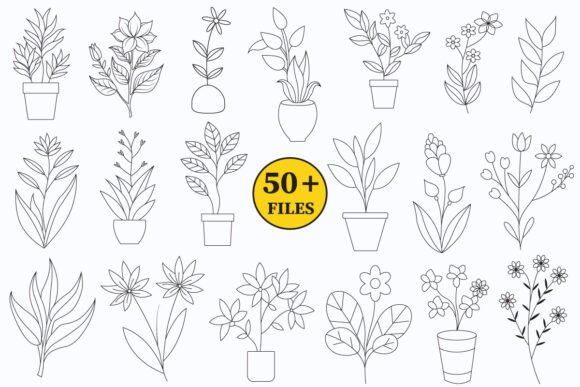
The Flower and House Plants Lineart Graphic has a soft, nostalgic feel. The lineart style is simple but effective, with delicate outlines that suggest a hand-drawn aesthetic. The layout is balanced, featuring a mix of floral elements and house plants arranged in a way that feels natural rather than forced. There's a quiet charm to it—like something you might find in a vintage sketchbook or a botanical illustration. This makes it ideal for projects that aim for a handmade, artisanal vibe.
The detail level is moderate. It’s not overly intricate, which is a plus if you’re looking for a design that works well in machine embroidery. Too much detail can be problematic, especially for beginners or those using smaller hoop sizes. But here, the lines are clear and spaced out enough to avoid overcrowding.
Real-World Use: Where It Shines and Where It Needs Care
I tested the Flower and House Plants Lineart Graphic on a few different fabrics and projects. It worked well on cotton tote bags and sweatshirts, where the simplicity of the design allowed for easy stitching and clear visibility. The lines were sharp, and the overall look was professional. For a custom embroidered tote bag, this design would be a great choice—it’s eye-catching but not overwhelming.
However, there are situations where this design may need extra attention. If you're planning to use it on small hoop sizes, you might find the details too fine to stitch effectively. Similarly, on textured or stretchy fabrics, the lines could blur or distort slightly. Thin or dark fabrics may also require careful thread color selection to ensure the design stands out.
This graphic is best suited for flat surfaces like t-shirts, aprons, and pillow covers. It doesn’t work as well on curved surfaces like caps or hats, where the stitching might pull or bunch. For baby items, the design is gentle and safe, but again, the fabric type and stabilizer use will play a big role in the final result.
Design Performance: Clarity, Value, and Customer Appeal
One of the strengths of the Flower and House Plants Lineart Graphic is its clarity. The lines are consistent, and the spacing allows for even stitch density. This means it can be used for both satin stitch and fill stitch applications without issues. It also lends itself well to applique designs, where the clean lines make for a neat finish.
From a commercial standpoint, this design has good potential. It’s versatile enough to be used in multiple product categories, from greeting cards to wall art. As an Etsy seller or small shop owner, you could easily incorporate it into your product lineup. The design adds value by offering a unique, customizable option that customers might find appealing for personalized gifts or home decor.
Customer reactions to this design would likely be positive. It’s not too bold, which is a plus for those who want something subtle yet stylish. It also has a timeless quality that makes it suitable for both holiday and everyday use. However, it’s important to remember that visual appeal depends on how it’s presented. A well-stitched, properly stabilized design will look professional, while a rushed or poorly executed one may not meet customer expectations.
Practical Designer Notes: Things to Keep in Mind
Before jumping into using the Flower and House Plants Lineart Graphic, I recommend testing it on scrap fabric. This helps you understand how the design translates to different materials and how the stitch density affects the final look. You should also check the contrast between your chosen thread colors and the fabric background. On dark fabrics, lighter threads may not show up as well, and vice versa.
Make sure the hoop size is appropriate for the design. If the design is too large for your machine’s hoop, you may need to split it into sections. Also, pay attention to small details like corners and edges—these can be tricky to stitch accurately. Using the right stabilizer is crucial, especially on stretchy or thin fabrics.
If you're planning to sell finished products or digital files, always confirm the licensing terms. Even though the Flower and House Plants Lineart Graphic seems straightforward, it’s better to double-check before using it commercially. And don’t forget to create printable mockups to showcase the design in real-world scenarios. This helps customers visualize the final product and increases their confidence in your offerings.
Final Thoughts: A Versatile Design with Real Potential
The Flower and House Plants Lineart Graphic is a solid choice for embroidery designers, crafters, and small business owners. Its clean, minimalist style makes it adaptable to a wide range of projects, from custom apparel to handmade gifts. While it has some limitations in certain applications, with proper care and execution, it can become a valuable addition to any embroidery project or product lineup.
Whether you're working on a personalized gift, a boutique product, or a commercial embroidery job, this design offers a balance of aesthetics and practicality. Just remember to test it thoroughly, consider the fabric and stitch requirements, and present it in a way that highlights its strengths. With the right approach, the Flower and House Plants Lineart Graphic can bring beauty and value to your work.